Compression Load Cell About
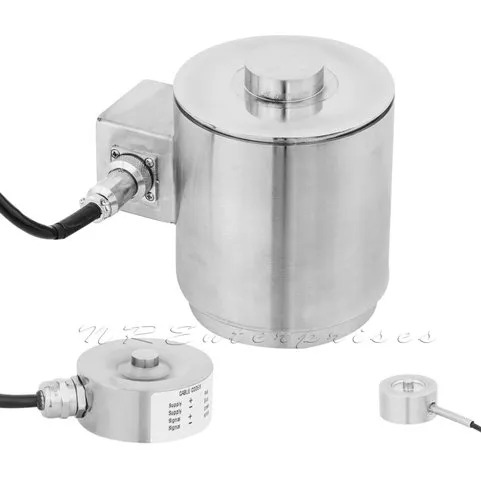
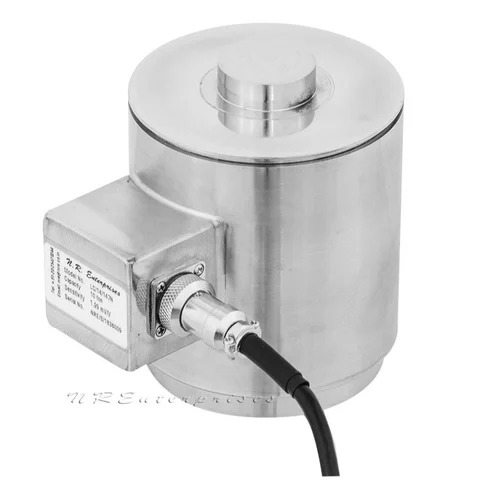
A Compression Load Cell is designed to measure compressive forces by converting applied pressure into electrical signals. It is commonly used in heavy-duty weighing systems such as truck scales, silo weighing, tank weighing, structural testing, and industrial presses. Industries including construction, mining, steel manufacturing, cement production, and material handling depend on compression load cells for precise load monitoring. These load cells are built with robust materials like stainless steel or alloy steel to withstand high loads and harsh environments. Their high accuracy, stability, and resistance to shock loads make them suitable for demanding industrial and structural measurement applications.
Outstanding Durability and ProtectionEngineered with an IP68 ingress protection rating and hermetically sealed housing, this load cell is impervious to dust and water, allowing it to function flawlessly in the most demanding industrial environments. Its rugged construction extends equipment longevity, even in outdoor or challenging conditions typical of truck scale deployments.
Precision Performance for Heavy LoadsWith high accuracy metrics such as a minimal creep error of +/- 0.03% FS and low temperature effects on zero and output, this load cell delivers consistent readings regardless of load duration or temperature variations. Its large 50-ton capacity makes it suitable for high-load applications like truck weighing.
Safe Operation and Versatile InstallationEngineered for safety, the load cell allows for a maximum safe overload of 150% and an ultimate safe overload of 200%. The flexible cable length options (2-20 meters) and broad temperature compensation range ensure straightforward integration into a variety of truck scales and industrial systems.
FAQ's of Compression Load Cell:
Q: How is the compression load cell installed in a truck scale?
A: The load cell is typically mounted beneath the scale platform at each support point. The hermetically sealed design and IP68 protection allow installation in outdoor locations, while the flexible cable length simplifies wiring. Proper mechanical alignment and electrical connections are crucial for accurate measurements.
Q: What benefits does hermetic sealing provide?
A: Hermetic sealing ensures that the load cell remains unaffected by moisture, dust, or other contaminants, which preserves performance and extends service life-especially important for truck scales exposed to the elements.
Q: When should the load cell's zero balance and calibration be checked?
A: Zero balance and calibration should be checked during initial installation, after overload incidents, and periodically as part of routine maintenance, ensuring the system remains within its +/-1% FS zero balance and maintains high measurement accuracy.
Q: Where can the compression load cell be used besides truck scales?
A: While designed for truck scales, its robust 50-ton capacity and durable construction make it suitable for other heavy-duty weighing applications such as industrial hoppers, silos, or structures requiring accurate load assessment in harsh environments.
Q: What is the process for connecting the load cell electrically?
A: The load cell features a recommended excitation voltage range of 5 to 15V DC, with a maximum of 15V. Wiring should adhere to the manufacturer's instructions, and the insulation resistance (1000 M Ohm at 50V DC) should be verified to prevent signal errors.
Q: How does temperature affect the load cell's accuracy?
A: The load cell has been engineered to minimize the effects of temperature changes on both zero balance and output, with compensated temperature range from -10C to +40C and guaranteed operation from -20C to +70C, thus ensuring stable performance.

 Send Inquiry



 Send Inquiry

 Send Inquiry
 English
 Spanish
 French
 German
 Italian
 Chinese (Simplified)
 Japanese
 Korean
 Arabic
 Portuguese