Shear Beam Load Cell About
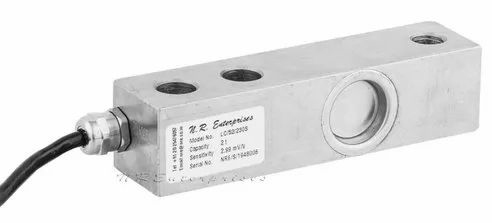
A Shear Beam Load Cell is a robust and widely used weighing sensor designed to measure loads through shear strain. It is commonly used in platform scales, tank and hopper weighing, pallet weighing systems, and industrial batching equipment. Industries such as logistics, food processing, agriculture, chemicals, and manufacturing rely on shear beam load cells for accurate weight measurement. These load cells are known for their high accuracy, durability, and resistance to side loads. They are typically constructed from alloy steel or stainless steel and sealed for protection against dust and moisture. Their stable performance makes them suitable for both static and dynamic weighing applications.
Precision and Durability for Industrial WeighingEngineered with stainless steel and IP68 protection, the Shear Beam Load Cell is built to deliver reliable performance in challenging industrial settings. Its high-precision output, combined with a wide capacity range and advanced strain gauge technology, makes it an essential component for accurate tank and vessel weighing applications. The design ensures stability under significant overload conditions.
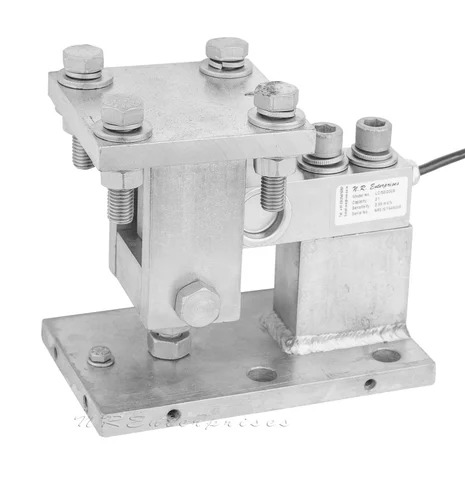
Versatile Installation and OperationThe cantilever mounting type and single-ended shear beam structure allow for easy integration into various weighing systems. With an operational voltage range from 5 to 15V DC, a nominal output of 2.0 mV/V, and a standard 3-meter cable, this load cell supports flexible configurations. Its temperature compensation further enhances measurement accuracy across changing environments.
FAQ's of Shear Beam Load Cell:
Q: How is the Shear Beam Load Cell installed for tank and vessel weighing applications?
A: The load cell is designed with a cantilever mounting system, making it straightforward to install beneath tanks, vessels, or platforms. Proper alignment and mounting hardware ensure optimal accuracy and load transfer.
Q: What benefits does the IP68 protection class offer for this load cell?
A: The IP68 rating protects the load cell from dust ingress and prolonged immersion in water, allowing reliable operation in harsh or wet industrial settings without compromising measurement accuracy.
Q: When should I select a load cell with capacity between 200 kg and 10 ton?
A: Choose the appropriate capacity based on the expected maximum load of your application. For tank or vessel weighing, consider the total weight (including container and contents) to select a load cell that provides optimal precision and safety margin.
Q: Where can this single-ended shear beam load cell be used effectively?
A: It is ideal for tank, hopper, and vessel weighing, as well as platform scales, batch weighing systems, and other industrial automation where robust and precise weight measurement is crucial.
Q: What is the process for connecting and operating this load cell?
A: Install the load cell using the provided cable (3 meters) to your weighing electronics. Supply an excitation voltage between 5 and 15V DC, and ensure proper grounding. The analog output (2.0 mV/V nominal) will respond proportionally to the applied load.
Q: How does the strain gauge theory ensure high precision in this load cell?
A: The strain gauge module accurately senses even minute deformations in the load cell structure when force is applied, translating this into a precise electrical signal for high-resolution weight measurements.
Q: What are the usage and long-term benefits of this load cell for industrial processes?
A: Its stainless steel construction, high overload tolerance, and wide temperature compatibility provide reliable, long-term weight monitoring, helping improve process efficiency, reduce downtime, and ensure product consistency in demanding industrial environments.

 Send Inquiry



 Send Inquiry

 Send Inquiry
 English
 Spanish
 French
 German
 Italian
 Chinese (Simplified)
 Japanese
 Korean
 Arabic
 Portuguese