Button Load Cell About
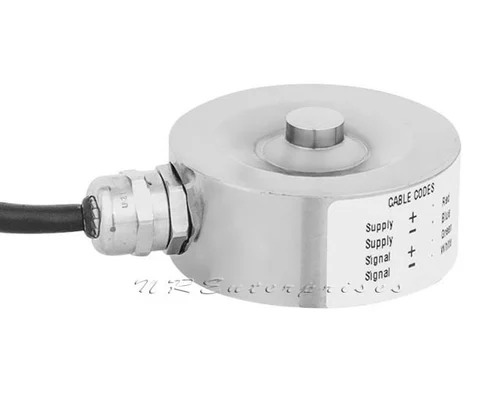
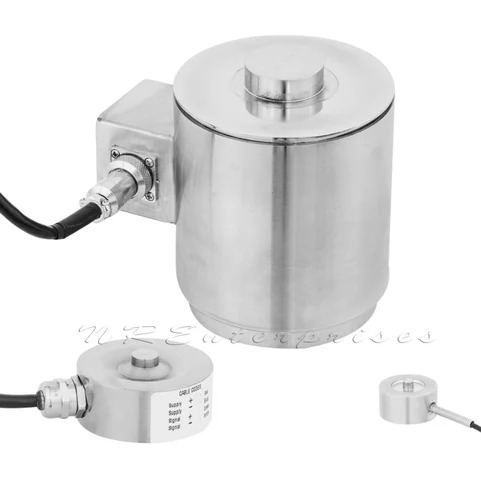
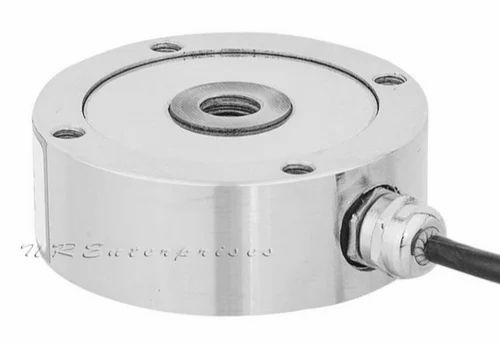
A Button Load Cell is a compact compression load cell designed for measuring small to moderate forces with high accuracy. Its small, button-like shape allows it to fit into tight spaces where conventional load cells cannot be installed. These load cells are commonly used in testing equipment, robotics, medical devices, packaging machines, and industrial automation systems. Industries such as electronics manufacturing, healthcare technology, and research laboratories rely on button load cells for precise force measurement. They offer high sensitivity, quick response, and stable performance. Their durable stainless-steel construction ensures long-term reliability even in demanding measurement environments.
Robust Ingress Protection and Material ExcellenceBuilt with IP66-rated ingress protection, this button load cell withstands dust and powerful water jets, making it suitable for rigorous industrial use. Fabricated from stainless steel, it ensures durability and long service life, even in corrosive or humid operating environments. These attributes make it a reliable choice for demanding measurement needs in both indoor and outdoor setups.
Wide Capacity Range and Precision PerformanceCovering capacities from 5kg up to 500 tons, this load cell supports a broad spectrum of applications, from small-scale lab testing to massive industrial weighing tasks. Its high accuracy and precision, enhanced by a strain gauge principle, ensure consistent and reliable measurements for critical quality and safety checks in engineering and manufacturing operations.
FAQ's of Button Load Cell:
Q: How does the button load cell maintain high accuracy under varying environmental conditions?
A: The load cell features a compensated temperature range of -10 to +40C and is constructed from stainless steel, which provides stability against temperature fluctuations and environmental contaminants. Its IP66 ingress protection further safeguards internal components, ensuring consistently high accuracy and measurement precision.
Q: What benefits does the stainless steel construction provide for the load cell?
A: Stainless steel construction offers excellent corrosion resistance and structural durability, making the load cell highly suitable for challenging industrial settings where exposure to moisture, chemicals, or harsh environments is common. This enhances the device's longevity and reliability.
Q: When should I use a compact, low-profile button load cell in my application?
A: Compact, low-profile button load cells are ideal when space is limited or when it's critical to integrate the measurement device into tight assemblies. They are commonly used in applications such as testing machines, industrial automation, and confined weighing setups where height or size constraints are important factors.
Q: Where can the button load cell be installed effectively?
A: Thanks to its IP66 protection and robust build, the button load cell can be installed both indoors and outdoors, including locations subject to dust, water spray, or fluctuating temperatures. It is widely utilized in manufacturing facilities, process plants, and outdoor industrial settings.
Q: What is the maximum safe overload for this load cell, and why is it important?
A: This button load cell supports up to 150% of the rated capacity as safe overload, with an ultimate overload tolerance of 200%. This means it can withstand occasional overloading beyond its nominal range, thus providing a safety margin that helps prevent damage and ensures operational continuity.
Q: How is the output from the button load cell utilized in typical applications?
A: The load cell provides a typical analog output of 2.0 mV/V, which can be interfaced with data acquisition systems, digital indicators, or controllers for real-time monitoring and control. This output format is widely supported in industrial environments, simplifying integration into existing systems.
Q: What is the process for selecting the right capacity for a button load cell?
A: To select the proper capacity, consider the maximum expected load, safety factors for overloads, and application-specific requirements. Choose a load cell where the capacity slightly exceeds the highest load anticipated, ensuring optimal accuracy without compromising on durability.

 Send Inquiry



 Send Inquiry

 Send Inquiry
 English
 Spanish
 French
 German
 Italian
 Chinese (Simplified)
 Japanese
 Korean
 Arabic
 Portuguese