Spring Testing Services About
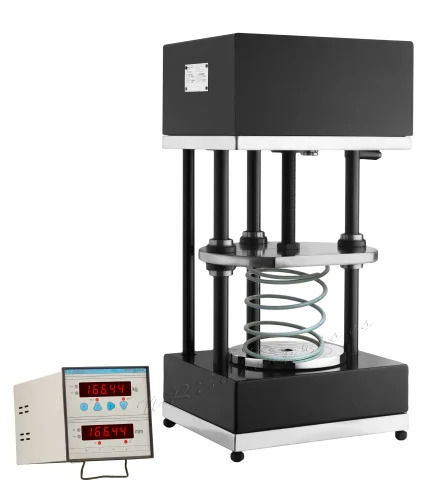
Spring Testing Services involve professional evaluation of springs to determine their mechanical properties, load capacity, and performance characteristics. Using advanced spring testing machines, technicians measure parameters such as compression force, extension force, stiffness, and fatigue resistance. These services are essential for manufacturers who need to verify product quality and compliance with engineering specifications. Industries including automotive, aerospace, electronics, and machinery manufacturing frequently utilize spring testing services for quality control and product development. Accurate testing ensures springs meet required standards, perform reliably in applications, and maintain durability under operational loads.
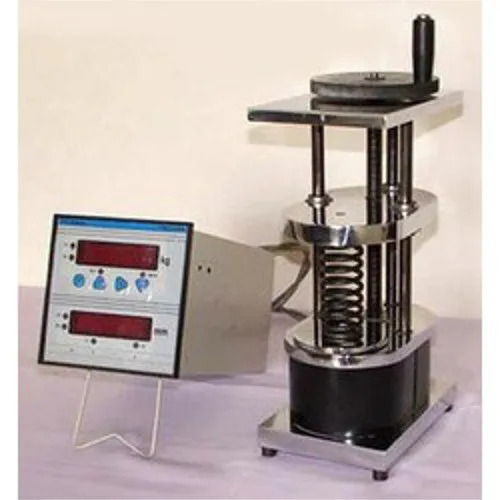
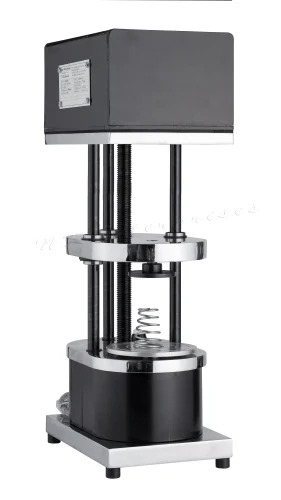
Efficient and Accurate Spring TestingEngineered for high-precision testing, this spring testing machine caters to comprehensive needs including compression, extension, and fatigue analysis. Its PLC-based control system ensures precise measurement, automatic data collection, and simplified operations, making it an invaluable tool for quality assurance in both industrial and research environments.
Seamless Data Management and AnalysisEquipped with modern connectivity features, the system offers effortless data output through PC integration and a printer port. The Windows-based analysis software streamlines result interpretation, report generation, and long-term data storage, boosting productivity and documentation efficiency for testing professionals.
FAQ's of Spring Testing Services:
Q: How does the spring testing machine ensure accurate results during testing?
A: The machine incorporates a high precision S-type load cell with 1% accuracy and 0.01 mm resolution, ensuring reliable measurement. With digital displays and automatic data recording, results are consistent and can be monitored in real time.
Q: What safety features are provided with this spring testing equipment?
A: An emergency stop button is integrated into the system to immediately halt operations in case of any hazard, safeguarding both the user and the specimen during testing.
Q: When should I use the different testing modes (compression, extension, fatigue)?
A: Compression mode is for compressive strength tests, extension mode checks tensile properties, and fatigue mode evaluates durability under repetitive loading. Select the mode according to your spring's performance criteria and application requirements.
Q: Where can this machine be used, and what power specifications are required?
A: It is suitable for industrial and laboratory environments with a stable operating voltage of 220 V at 50 Hz, supporting a max power consumption of 0.5 kW. It requires a tabletop mounting and a standard gas pressure of 6 kg/cm2.
Q: What is the process for connecting the machine to a PC or printer?
A: The machine offers RS232 or USB interfaces for straightforward PC connectivity, and a dedicated printer port for direct printouts. Installation is facilitated by the provided Windows-based analysis software.
Q: How can customizable specimen sizes and test parameters benefit my application?
A: Customizable specimen size options and adjustable test parameters allow tailored testing for diverse spring types, ensuring compatibility with unique industrial or research requirements.
Q: What are the advantages of using automatic control and data recording features?
A: Automatic operation and data logging reduce manual intervention, minimize errors, and streamline the overall testing process-saving time while maintaining high repeatability and documentation accuracy.

 Send Inquiry


 Send Inquiry

 Send Inquiry
 English
 Spanish
 French
 German
 Italian
 Chinese (Simplified)
 Japanese
 Korean
 Arabic
 Portuguese