Pin Load Cell About
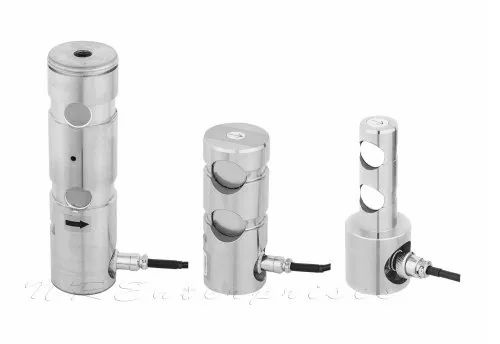
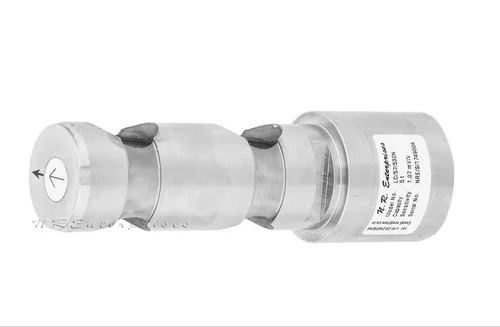
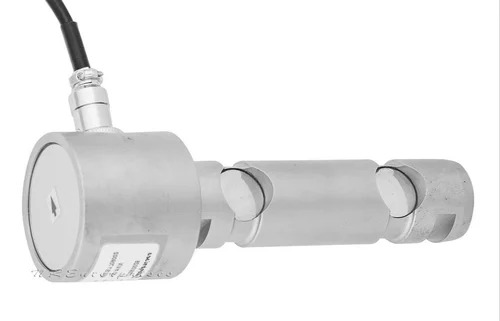
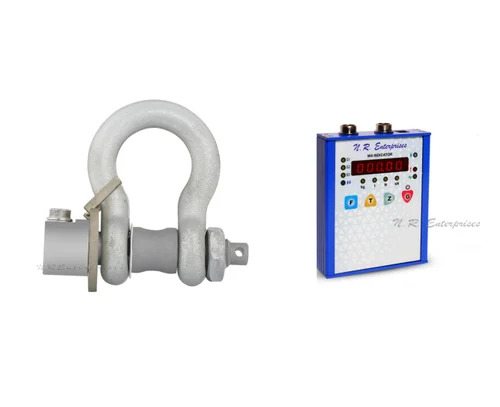
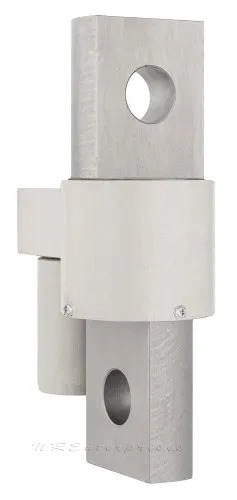
A Pin Load Cell is a compact force sensor designed to replace traditional load-bearing pins in machinery or structural joints. It measures shear forces acting on the pin and converts them into electrical signals for monitoring and control. Pin load cells are widely used in cranes, construction equipment, material handling systems, and heavy machinery. They provide accurate load monitoring without altering the mechanical structure of the equipment. With rugged construction and reliable performance, these sensors are suitable for demanding industrial environments. Pin load cells enhance safety, enable load monitoring, and support predictive maintenance in critical lifting applications.
Precision Engineering for Industrial NeedsThis Pin Type Load Cell stands out for its ability to handle a vast range of load capacities, making it suitable for various industrial applications such as cranes, hoisting, and material handling. Built from durable materials and designed with precision, it ensures accurate and consistent measurement even under challenging conditions.
Optimal Protection and ReliabilityWith its IP67 rating, this load cell is highly resistant to dust and water ingress, allowing it to perform reliably in tough environments. The high overload protection safeguards both the device and your operations, minimizing risk and extending service life, making it a dependable choice for heavy-duty industrial use.
FAQ's of Pin Load Cell:
Q: How is the Pin Type Load Cell installed in an industrial setting?
A: The Pin Type Load Cell is typically integrated at pivot points or load-bearing joints of machinery. Installation involves replacing an existing load-bearing pin with the load cell, then connecting it to a suitable indicator or data acquisition system to monitor load changes in real-time.
Q: What are the benefits of using a Pin Type Load Cell with IP67 environmental protection?
A: An IP67-rated load cell is protected against complete dust ingress and can withstand immersion in water up to 1 meter for 30 minutes. This ensures reliable, long-term performance even in harsh or wet industrial environments, reducing the risk of sensor failure and maintenance costs.
Q: When should I opt for a load cell with a wide load capacity range like 200 kg to 50 t?
A: Selecting a load cell with a broad load capacity range is advantageous when you need flexibility for various applications. It allows you to use the same sensor model across different projects or machinery, simplifying inventory and maintenance while supporting both light and heavy loads effectively.
Q: Where is the Pin Type Load Cell commonly used in industry?
A: This type of load cell is often used in cranes, hoists, winches, and overhead lifting equipment, as well as in mobile weighing systems in construction, mining, and logistics. Its adaptability makes it an essential sensor for any place that requires accurate force or weight measurement at load-bearing points.
Q: What is the safe and ultimate overload capability of this load cell, and why is it important?
A: The safe overload limit is 200% of the load cell's full scale, while the ultimate overload can withstand up to 400%. This means the device can handle significant accidental overloads without being damaged, which enhances safety, reduces downtime, and protects your equipment investment.
Q: How is the load cell powered and what excitation voltage is required?
A: This load cell operates efficiently on a 10-15 VDC excitation voltage. Providing a stable voltage in this range is essential for achieving precise and repeatable measurement results across its full capacity spectrum.

 Send Inquiry



 Send Inquiry

 Send Inquiry
 English
 Spanish
 French
 German
 Italian
 Chinese (Simplified)
 Japanese
 Korean
 Arabic
 Portuguese