Digital Load Cell Amplifier About
A Digital Load Cell Amplifier is a precision electronic device used to amplify and digitize signals generated by load cells. It converts small analog signals into accurate digital outputs for monitoring, control, and automation systems. Designed for high-precision applications, it provides excellent stability, noise immunity, and fast response time. Digital load cell amplifiers are commonly used in industrial weighing systems, material testing machines, packaging equipment, and automated production lines. Industries such as pharmaceuticals, food processing, aerospace, and manufacturing rely on these devices for consistent and reliable measurements. Advanced features include programmable settings, communication interfaces, and compatibility with PLCs and data acquisition systems.
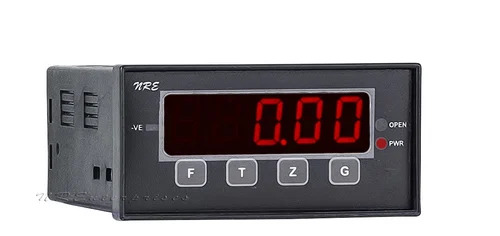
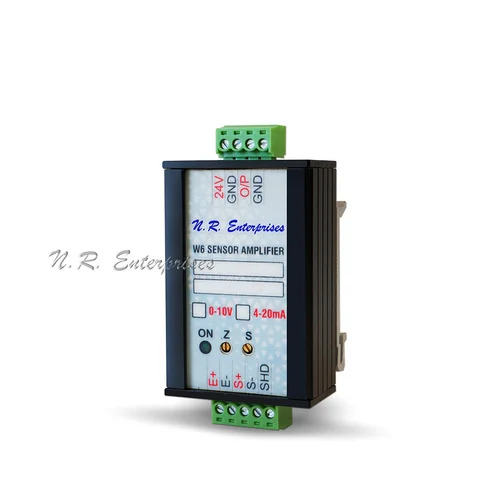
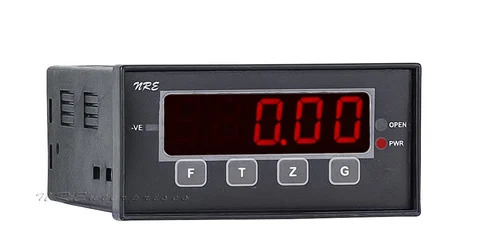
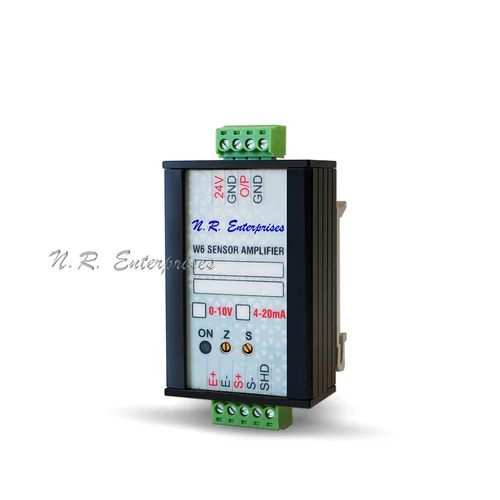
Integrated Signal Conversion and CalibrationThis amplifier offers selectable analog outputs-0-10V DC or 4-20mA-ensuring flexibility for various industrial measurement requirements. Digital calibration via front panel keys simplifies setup and adjustment, minimizing installation effort. Its 16-bit AD conversion and high signal-to-noise ratio provide consistent, precise readings, while the integrated heatsink ensures stable operation without external cooling.
Versatile Mounting and Robust ProtectionEngineered for convenience, this amplifier supports both DIN rail and wall mounting options, adapting to different installation needs. Its ABS plastic enclosure and IP20 ingress protection safeguard internal electronics against dust and accidental contact, enhancing reliability and safety.
Seamless Compatibility and CommunicationCompatible with all standard strain gauge load cells, this amplifier integrates easily into most weighing and force measurement systems. The device features RS232 standard communication, with RS485 available as an option, facilitating integration into modern industrial networks for real-time data collection.
FAQ's of Digital Load Cell Amplifier:
Q: How is digital calibration performed on this amplifier?
A: Digital calibration is carried out using the front panel keys. The user can input calibration values and make adjustments directly on the device, streamlining the setup process and enabling precise configuration without extra equipment.
Q: What types of load cells are compatible with this amplifier?
A: The amplifier is designed for universal compatibility with all standard strain gauge-based load cells, accommodating typical input signals of 0-20 mV and excitation requirements with a 24 VDC output.
Q: When should I use the 0-10V DC output versus the 4-20mA output?
A: Select the 0-10V DC output for devices or systems that accept voltage input, while the 4-20mA output is ideal for applications requiring current signals, especially over long distances or in environments prone to electrical noise.
Q: Where can this amplifier be installed?
A: The unit offers versatile mounting options, supporting both DIN rail and wall mounting to accommodate a range of industrial control panels or equipment layouts.
Q: What is the process for connecting the communication interfaces?
A: The amplifier comes with an RS232 interface by default, which can be connected to compatible data acquisition systems or controllers. An RS485 interface is available as an option for multi-drop or longer cable runs, further enhancing integration flexibility.
Q: How does this amplifier benefit my load measurement system?
A: With high resolution, low noise (<1 mVrms), robust protection, and flexible output choices, the amplifier ensures accurate, reliable measurement and signal transmission, which helps improve process control and operational efficiency.

 Send Inquiry



 Send Inquiry

 Send Inquiry
 English
 Spanish
 French
 German
 Italian
 Chinese (Simplified)
 Japanese
 Korean
 Arabic
 Portuguese